Sun March 15 Another Long Drive

IMG_2547                                                                                                                    IMG_2556

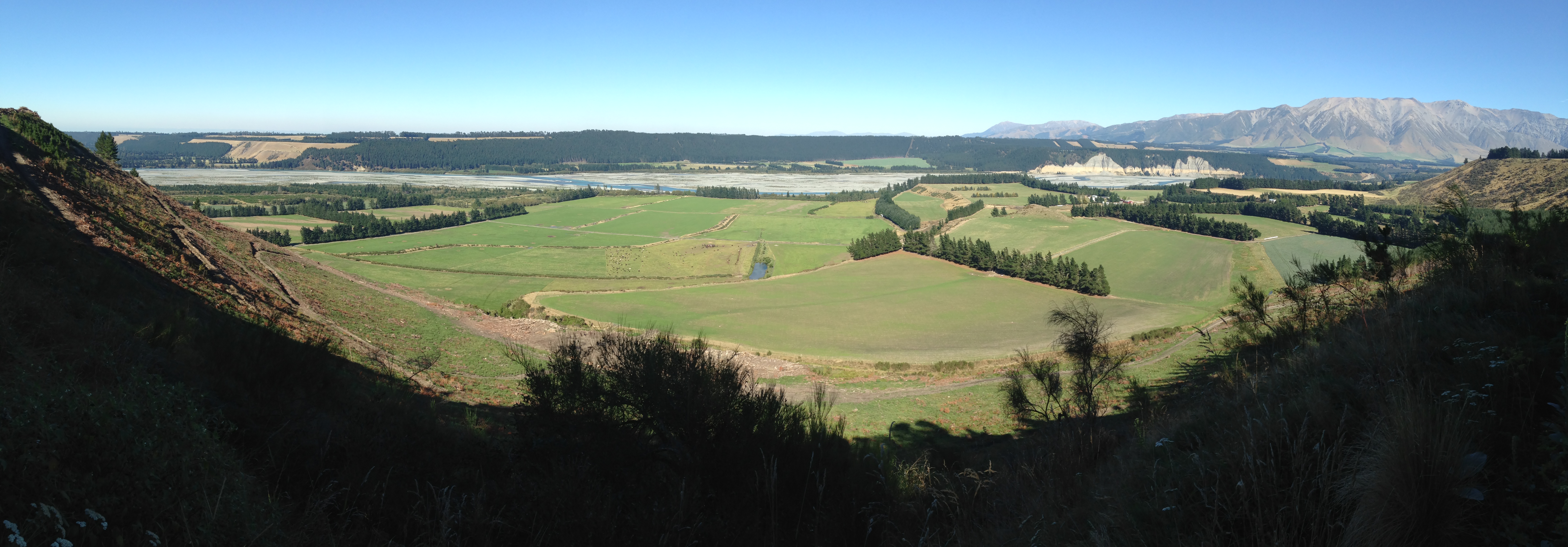
Another long driving day – 6 hours – from Arthurs Pass National Park to Aoraki/Mount Cook National Park, which is in the midst of the Southern Alps.

Most of the scenery along the way was very pastoral (bucolic, as Diana would say.)

However the guest house where we stayed last night was the most bucolic place I’ve ever seen.  Inhabited by a young couple (both tall, blonde and gorgeous, like many NZers) with two small children, in a lovely little house with wonderful landscaping (rose gardens galore, grasses, etc,) fields with an alpaca herd, henhouse, a dog, laundry blowing in the wind.  Absolutely pastoral, but still only 70 km from Christchurch.

One of my favourite things about travelling is seeing how other people live, in locations and circumstances unlike anything I’ve seen.  Sometimes I’m very envious – and I was with that guest house  situation last night!

Anyway, I digress.

Back to today’s driving…until we got much closer to the Alps, the scenery was all farming – herds of cattle and sheep (most were newly-shorn, which makes them very skinny and sad-looking!) and fields of various crops.  Pretty but not overwhelming.

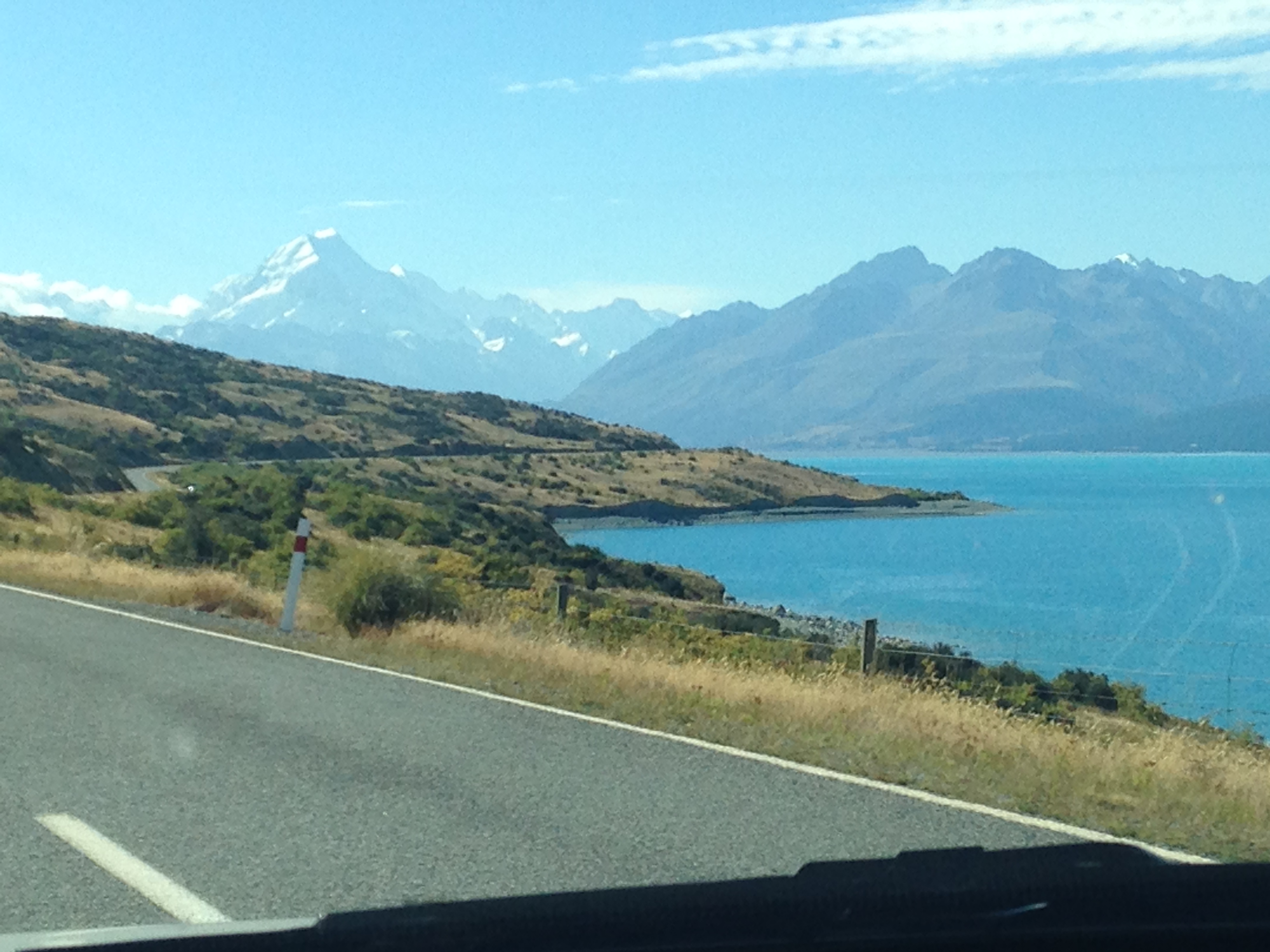
But finally the mountains started appearing on the horizon and eventually we encountered two lakes – Lake Takapo and Lake Pukaki, which are very much of the brilliant turquoise denomination.  Lake Pukaki sits close below Mount Cook and heralded our arrival, finally, at our destination.

We have had spectacular weather and we arrived here to amazing views of these serious mountains all around us.  However it appears that tomorrow will be rainy and cool here at Mt Cook.  Peter is hoping that means more snow at higher elevations.
Sat March 14 A Long Drive

IMG_2533 IMG_2535

We spent most of the day in the car, covering more than ¾ of our trip south to Mount Cook.  We had originally planned to spend today in Abel Tasman Park, drive about 2 hours to a motel and then do the massive drive tomorrow, but we’ve learned that we need to spread the driving out more.  It’s still a bit stressful for Peter with the left-hand stuff plus the roads are pretty winding so we don’t often get beyond 80 kph.

It was the first time we went “off plan”, sacrificing tonight’s reservation for something farther along the road.

And a very wise decision.  We were on the road for 9 hours, with 8 hours of driving.

We took our time, we both stayed mellow (aka not one single altercation!) and with some mid-day googling and phoning, we were able to find a small B&B for the night.

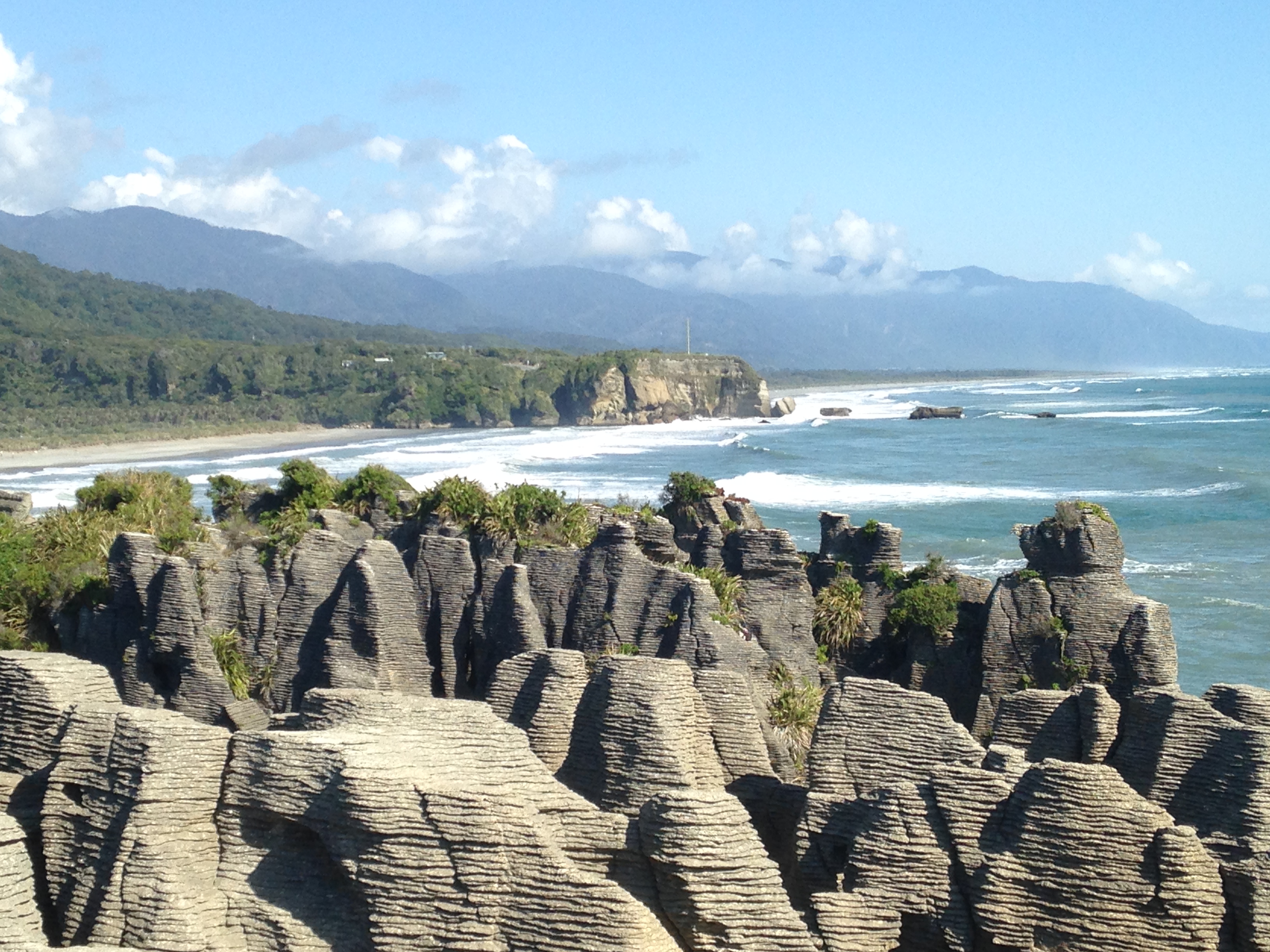
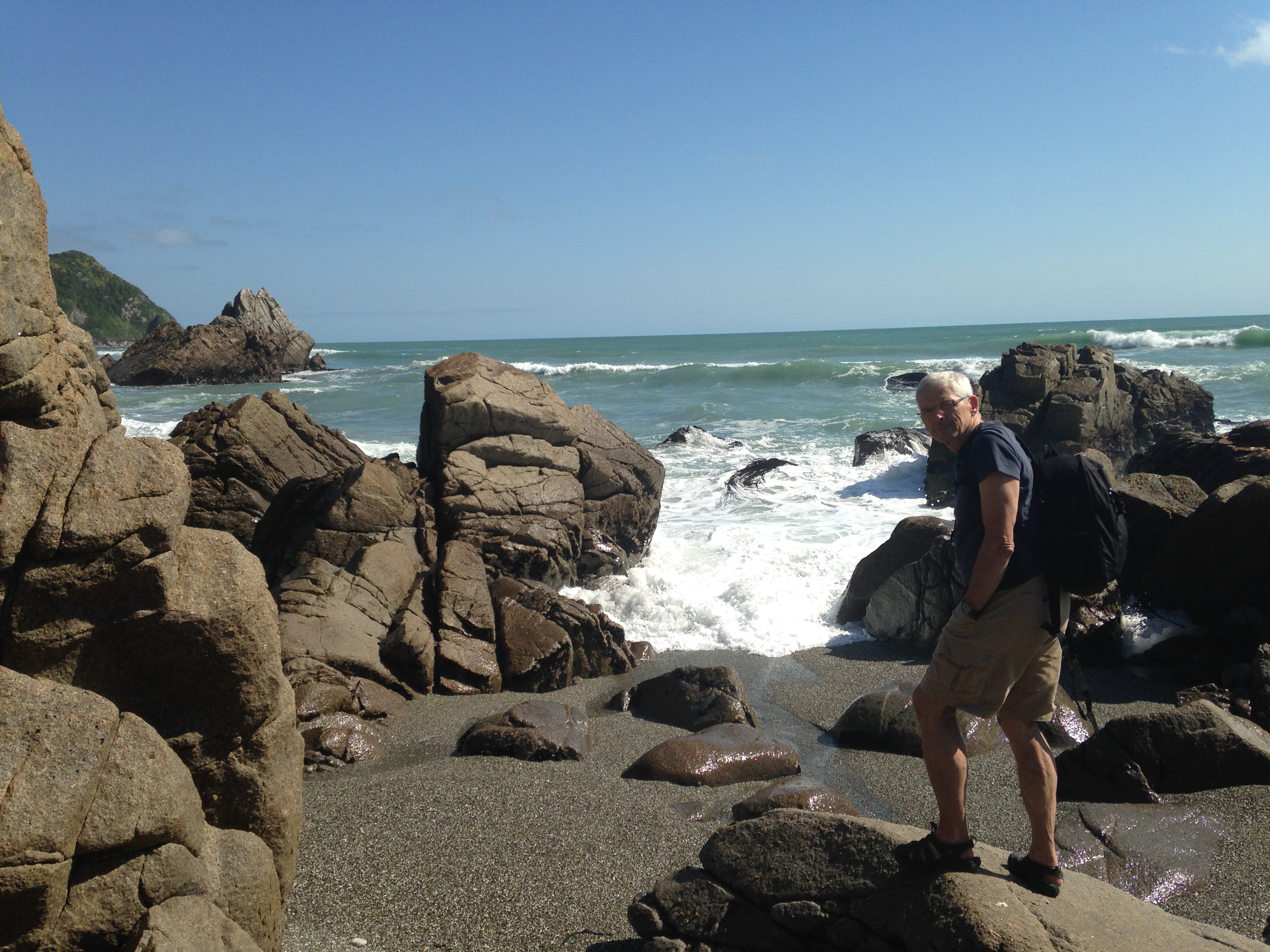
It was a lovely drive for the last half. Things picked up considerably once we got all the way west to the Tasman Sea, with its gorgeous turquoise waters. The shoreline is stunning with lots of long views of rocks and surf and it is really completely deserted.  We saw hardly a single house or person except in a couple of tourist spots. The big attraction is the Pancake Rocks at Punakaiki (my pic above but Peter is posting his on Facebook and surprisingly they are much better!)

Then we turned east on the Great Alpine Highway via Arthur’s Pass during “Magic Light” and the mountain scenery was dramatic.  This was the first “Rocky Mountain” type range we’ve seen and it was showing itself off nicely for us.  Quite breath-taking.

Now settled in a lovely little B&B here at the end of the only road in a town with 3 stores on the main street.  We have alpacas at the door and a train cruising by every few hours!

Friday the 13th Hiking the Tasman Bay (and no bad luck at all!)

IMG_2461 IMG_2487IMG_2496IMG_2515IMG_2521

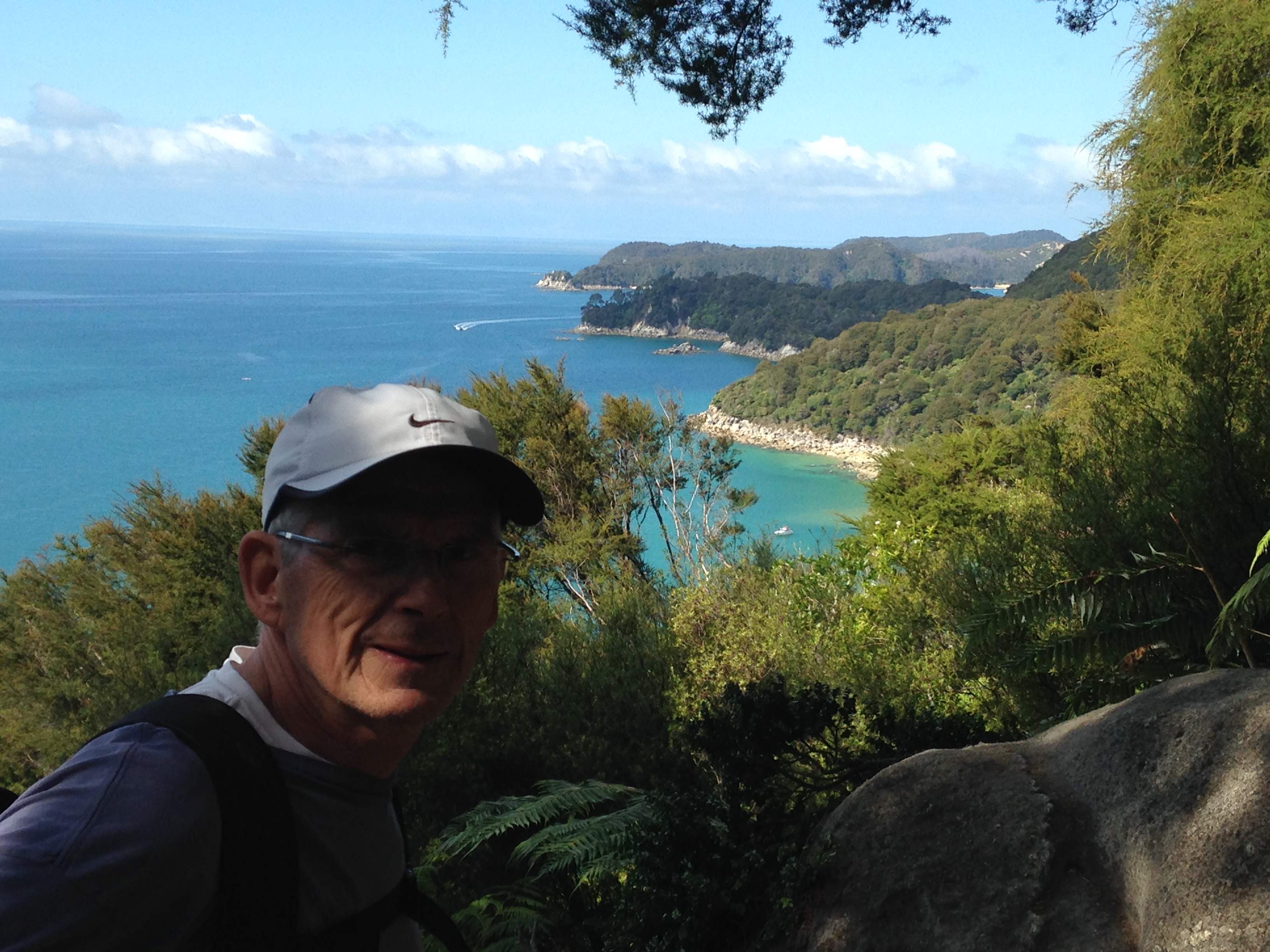
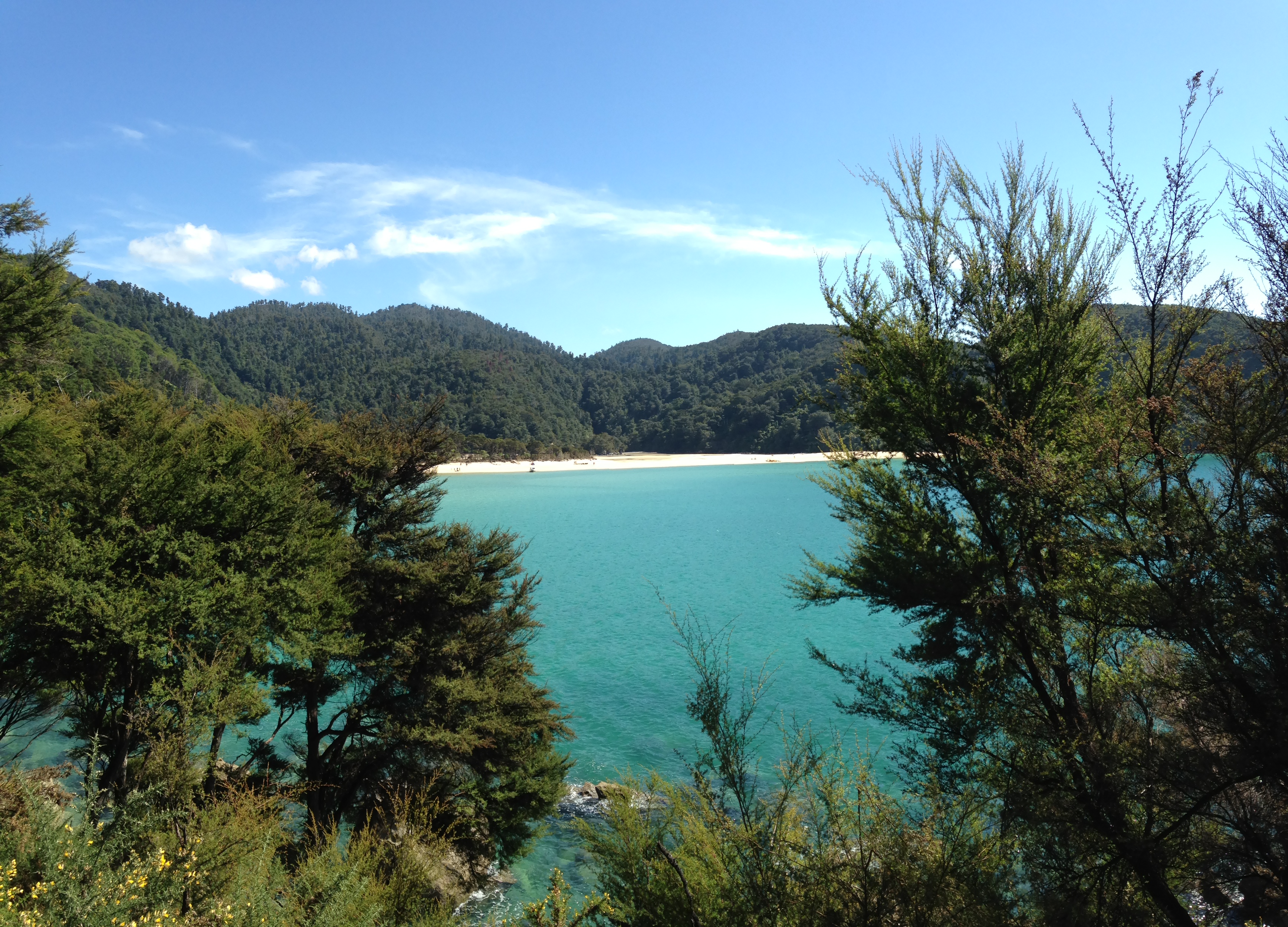
Today was a totally fun day!  We started with a water taxi trip up the Tasman Coast to drop us off partway along the Coastal Trail. We then hiked by ourselves about 15 km north and were picked up and taken home by another water taxi.

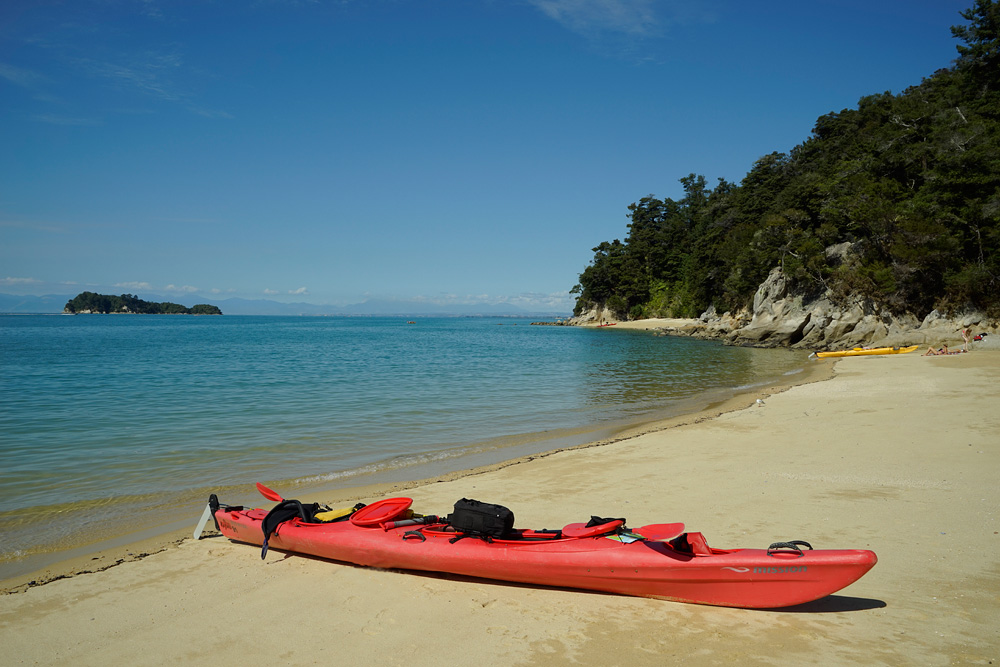
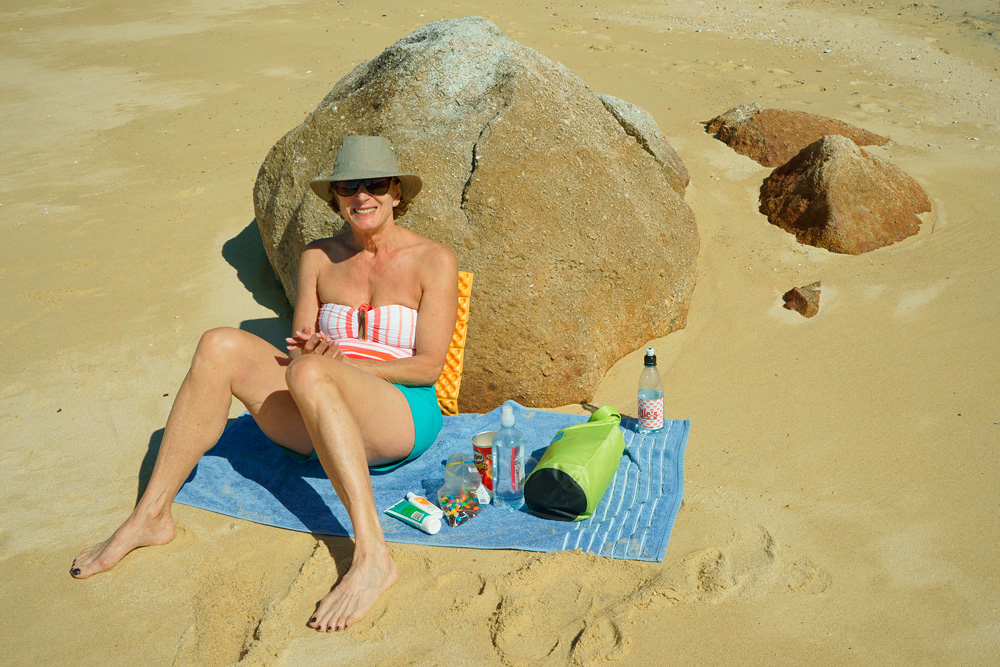
The beaches along the way were just spectacular.  We’d be hiking along going up and down through not-quite-rain forest terrain and suddenly, through the trees, we’d see the most vivid turquoise colour that reminded us we were actually hiking along the Tasman Sea.  And then we’d begin our descent to beautiful golden sandy beaches. Quite the nicest beaches I’ve ever seen, particularly because you can only get there by hiking, kayaking  or water taxi, and the taxis only come every 90 minutes so they are not obnoxious.

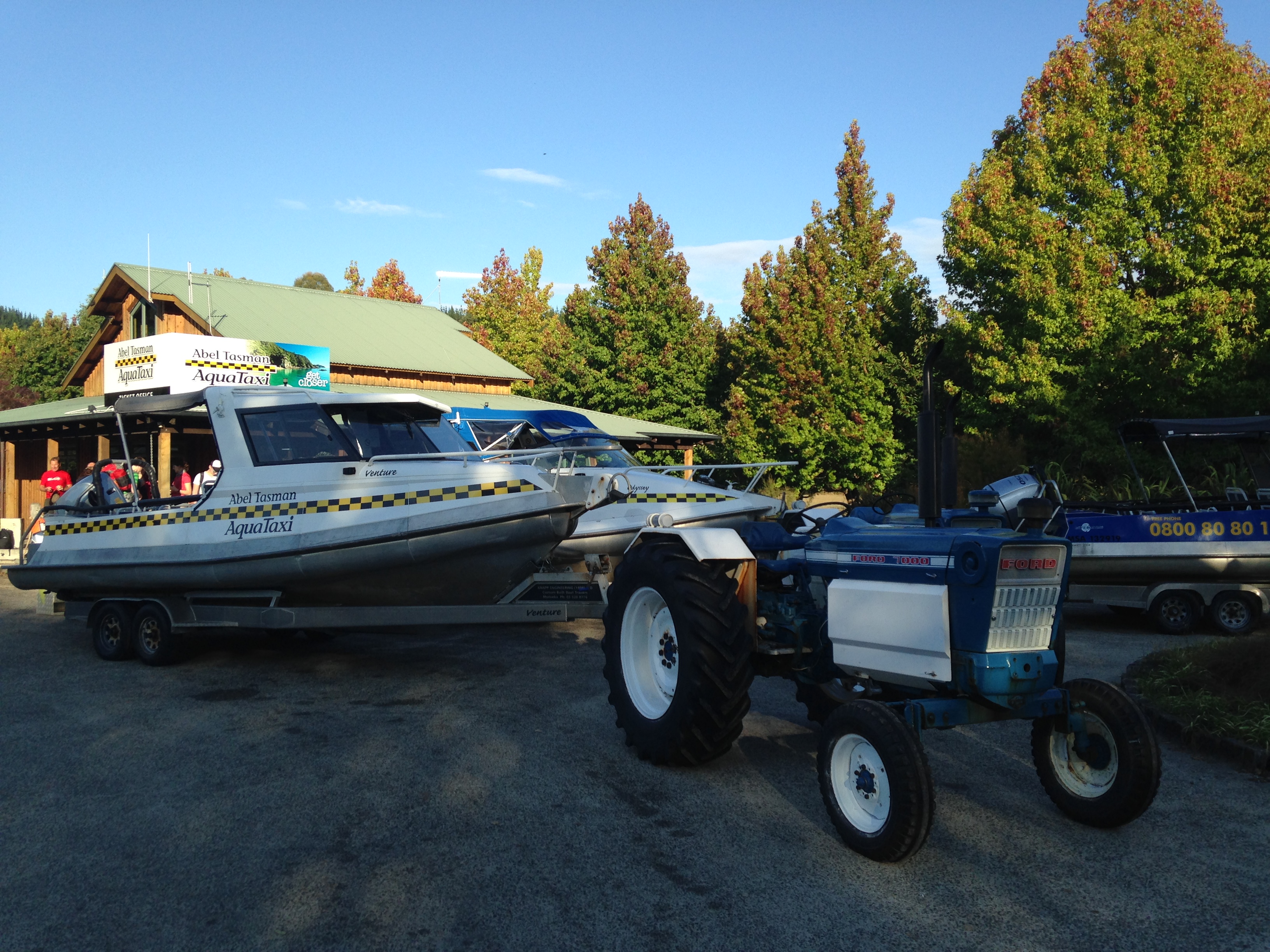
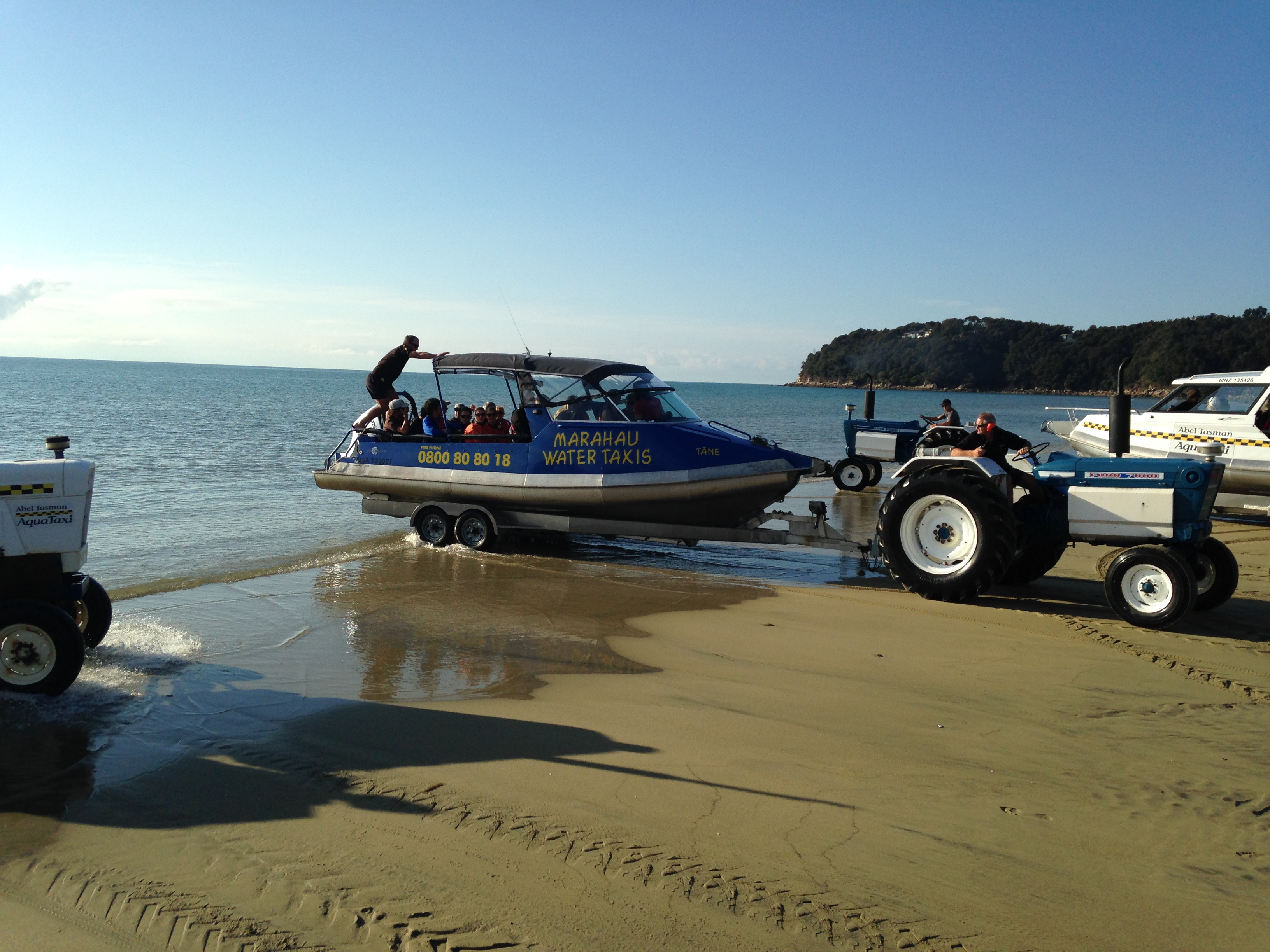
In fact, our water taxi trips were really fun!  We started by getting in the boat at a road-side depot, donning our life jackets and then being pulled by tractor along the road down to the water.  Boating on land, as it were.  Really quite hilarious.

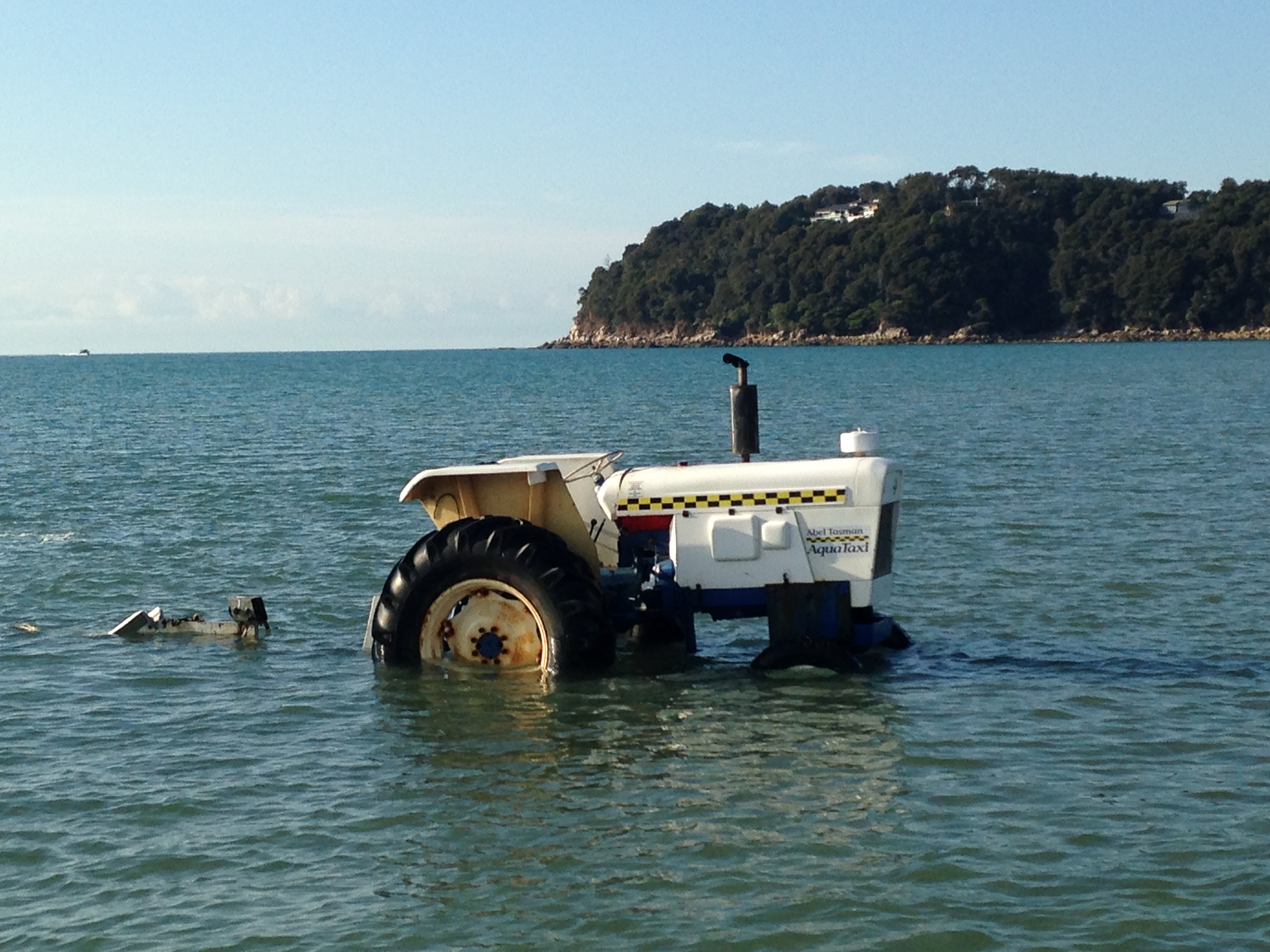
The tractor then drives across the beach and right into the water until there’s enough depth for the boat to start its motor and take off!  Quite the morning rush hour down along the beach at low tide as all the tours and taxis start around the same time. Crazy tractor jockeying by crazy Kiwi drivers!

And then, later in the day, the same jockeying continues at late afternoon rush hour, as they all make their way up the ramp onto their trailers, to be pulled back along the road to the taxi depot!  It’s quite insane and a lot of fun.

And then we finished off the day with dinner by the ocean at the one sit-down (and licensed!) restaurant in this small tourist haven at the edge of Abel Tasman National Park.

Final thought on our time in this beautiful coastal area – these Kiwis sure know how to create a fun time!

Thurs March 12 Kayaking the Tasman Bay

Kayak Tasman_DSC0890 copy

Wow and wow again.  This was a real treat of a day.

A bit tedious getting going – you’d think we were in the USA, with the extent of waivers, training and orientation that we had to endure from Abel Tasman Kayak Rentals.  It could only be for insurance purposes!

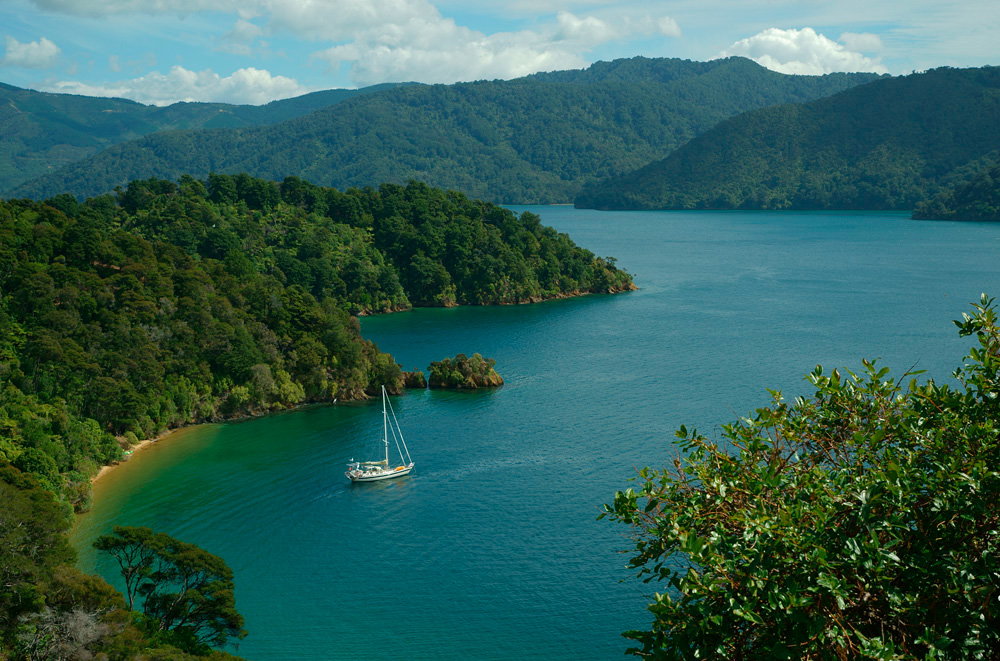
However, once they let us loose, it was a wonderful calm paddle along the coast of the Tasman Bay, which is dotted with beautiful little beaches and interesting rocky shorelines. The water is a brilliant turquoise, and again the weather gods were gracious.

We encountered a small seal colony on one rocky shore, where we were able to get close enough to watch the mommy and baby seals interact – which mostly consisted of the mothers trying to rest in the sun, and swatting at the babies when they tried to bother them!  Very cute little guys, I must say.

It was a good 3-hour paddle but the day was sunny and warm, with little wind until the return trip, when it was mostly at our backs. So we didn’t realize we were tired until we were back on land, fortunately only a short walk from our chalet!

Wed March 11 To the South Island

_DSC0885 copy

Today we travelled from the North Island to the South Island, taking a Bluebridge ferry from Wellington to Picton.  We then drove about 4 hours northwest to Abel Tasman National Park.

Abel Tasman is the Dutchman who originally discovered New Zealand in the 17th century, although he was prevented from landing on this coast by the original inhabitants who weren’t so keen for his company. But his name is everywhere today, from The Tasman Sea, to the Tasman Bay, to the town of Tasman, to the National Park.

The Park is in the northeast corner of the Island, and runs along the Tasman Bay.  Supposed to have the best kayaking in the world, so that’s our plan for tomorrow.

Tuesday March 10 A day to leave behind

It was a very long driving day, with two cranky people stuck in a car together, and ending with navigation challenges plus horrific rush hour gridlock in Wellington.  A good day to forget about and focus instead on tomorrow’s ferry ride to the South Island.  (Although I must say there were amazing views on that very LONG drive from New Plymouth to Wellington, and Wellington is a lovely coastal town.)

Monday March 9 From Mount Taranaki to the Tasman Sea

IMG_2414IMG_2417IMG_2419

At 2518m high, Mount Taranaki sits in the middle of Egmont National Park, and is a relative volcanic baby at 125,000 years of age.  It last erupted in 1755.

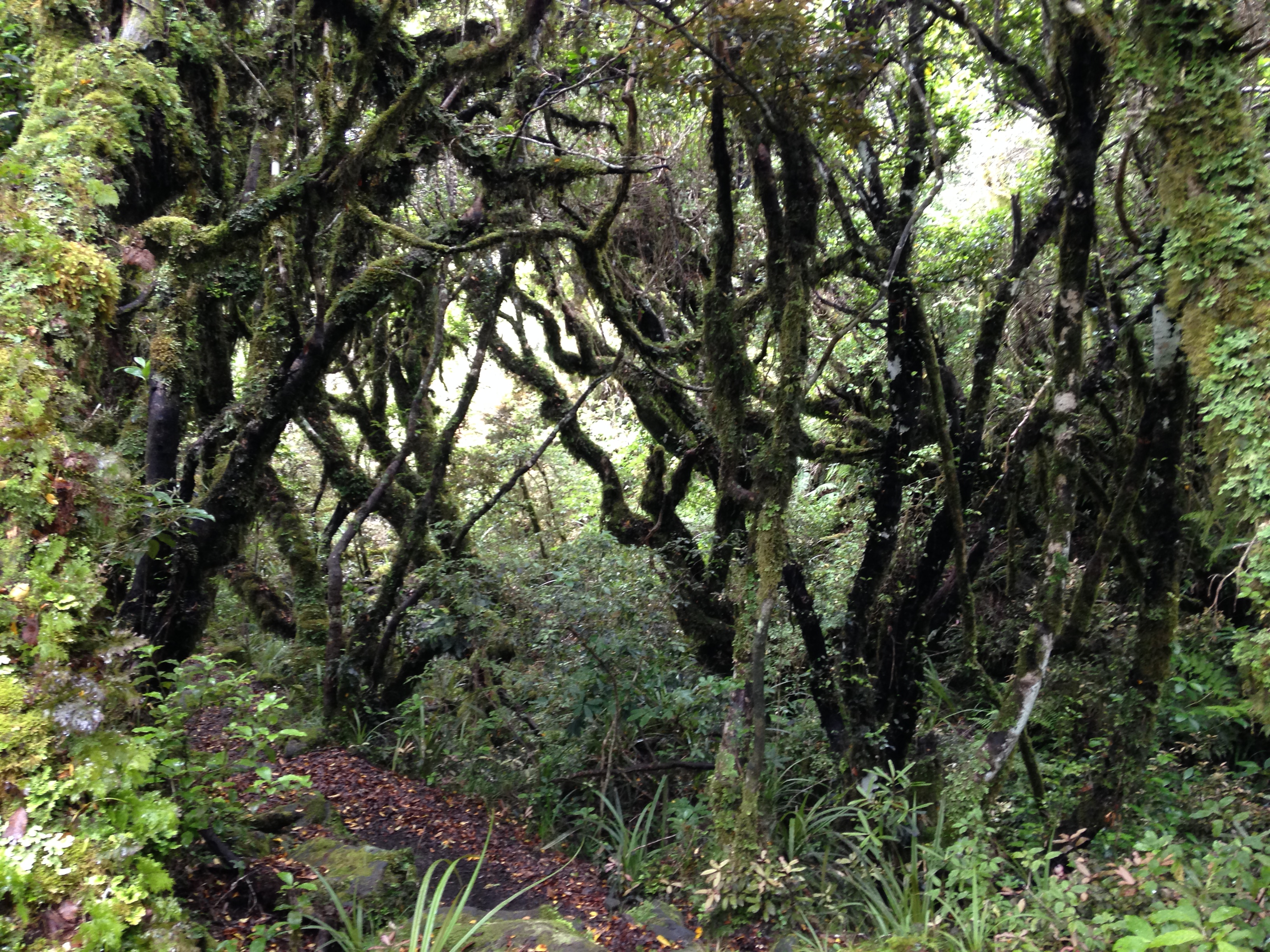
Like most mountains, it is often shrouded in clouds, although the peak is frequently visible above the clouds.  Today was our only hike day so, despite the low cloud cover, we picked a hike that would satisfy my need for views along with Peter’s need for rainforest. And we set off along the Maketawa Hut Round Trip.

The first third of the hike went through astoundingly lush rainforest territory.  We have never seen the vegetation and plants that grew up, around and over the whole trail.  Spectacular.

We then started climbing, and climbing, and climbing.  Probably about 1,000m in total climb although still well below the peak. But there were no views as a reward for our climb – only enough to see what could have been magnificent 360s. But, we knew the weather wasn’t going to cooperate so it wasn’t a surprise, and no regrets for an energetic hike.

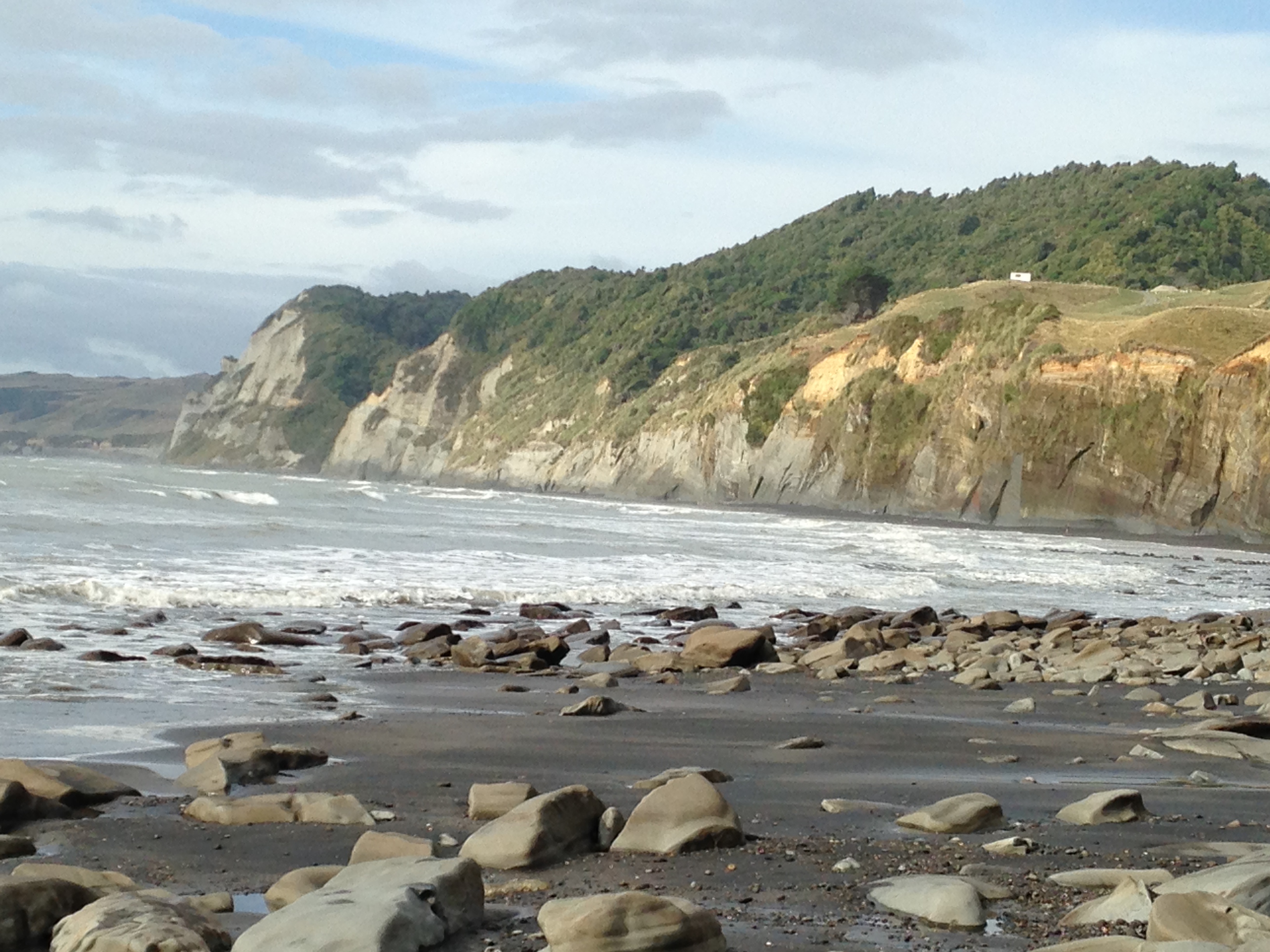
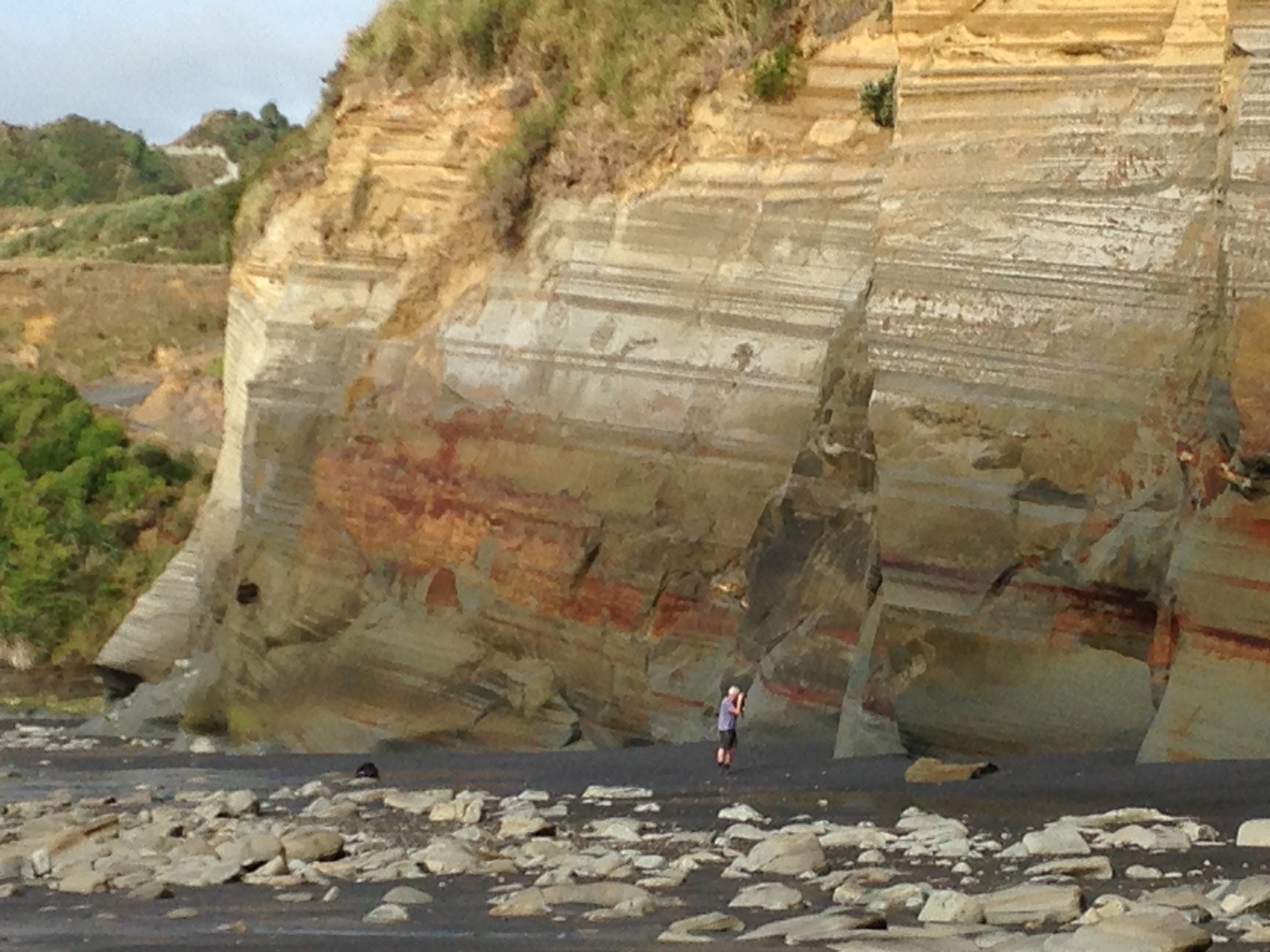
After that, we drove over to the west coast and saw, for the first time, the Tasman Sea.  It sounds SO exotic to me, but it actually just looks like a regular ocean!  We checked out the beach below the White Cliffs and the beach scenery was pretty interesting.  Peter went nuts with the abstract rock formations along and below the cliffs.  The sand was very black, so equally dramatic.  Very unusual scenery.

We stayed in New Plymouth, an enviable location with both ocean and mountains within easy reach.

Some thoughts on driving on the left-hand side.

One of the prevailing explanations for this:  centuries ago in England, the knights used to ride their horses on the left-hand side of the trail, so as to keep their undefended left side to the bushes, and their right sword hand free to engage the enemy when necessary.

And that could be why traffic in many remaining parts of the British Commonwealth continues to drive on the left-hand side.

But it’s not an easy transition for those of us used to the opposite!

There is a lot of media attention right now in NZ to the issue of allowing right-hand drive tourists onto their roads.  Apparently there have been several terrible collisions lately, supposedly caused by tourists, and there is a move afoot to get all visitors to pass a driving test before allowing them on the roads. Probably not very practical to administer, but it is much on the minds of the locals these days.

And in fact, this was one of Peter’s key worries when we travelled here – adjusting to the driving, especially in Auckland where we landed at 5:30am and had our first rental car reserved. So we had already decided to either get our car driven to our downtown hotel by a Hertz employee or else take a taxi there to get a feel for the roads and traffic patterns before driving ourselves.

Our hotel was farther from the airport than we thought and there were no extra Hertz staff working so we ended up taking a taxi.  Very fortunately, we got a really nice driver who was very polite and very helpful about the rules of the road.  $100 to get to our boutique hotel and, when we got there, it wasn’t open yet! So we decided to get the driver to take us back to the airport and wait until daylight to drive our car back to the hotel.  Another $70!

Since we spent both trips talking all the time about the road rules and watching the way traffic worked and the turn patterns, we like to think we did our bit by taking a $170 driving lesson before putting the key in our ignition!  Not sure how well it worked because our trip back downtown to our hotel was pretty nerve-wracking and took every ounce of concentration from both of us to get there in one piece. But I honestly don’t think we could have made it all if we had gotten straight into the car and driven out into Auckland traffic, not unless we did the whole drive at 20km/hr (with its own repercussions!)

The adjustment really does require significant effort and I’m sure it takes even longer before emergency reactions are accurate.  If a driver does not stay totally alert, it is all too easy to see how quickly a bad collision would occur and why the locals should be so concerned.

Sun Mar 8, Wai-O-Tapu Thermal Wonderland plus a Spectacular Drive across the island

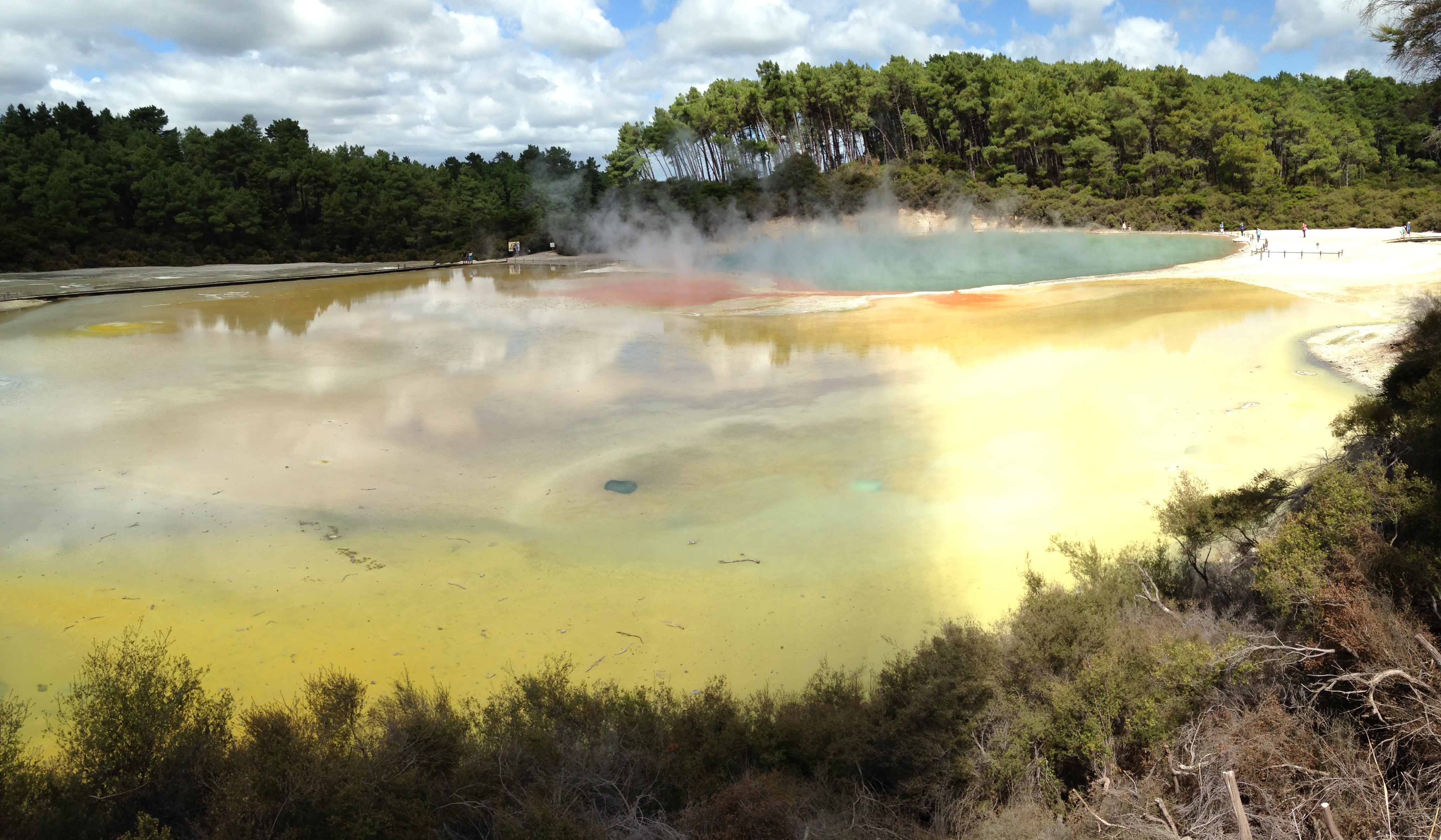
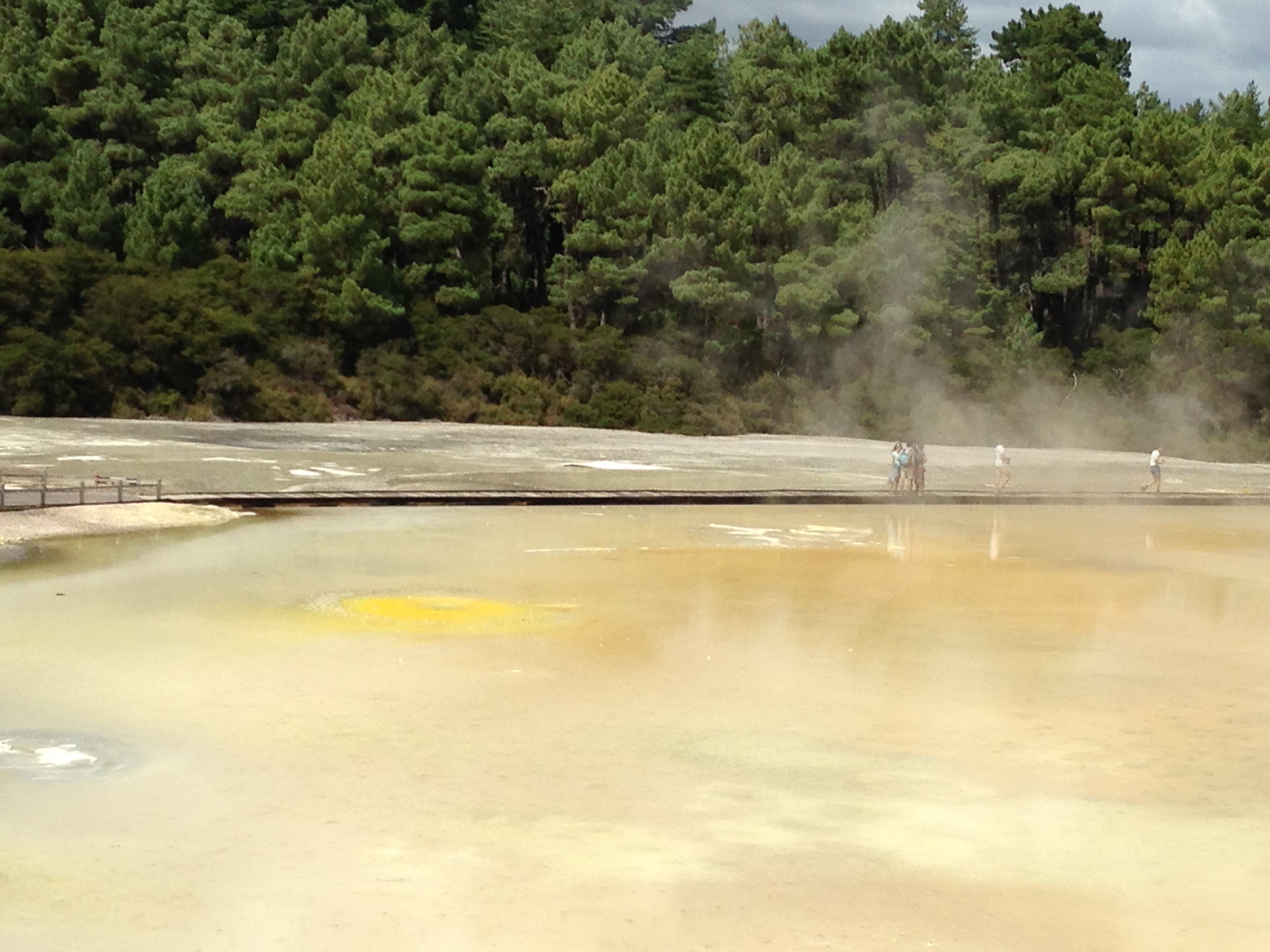
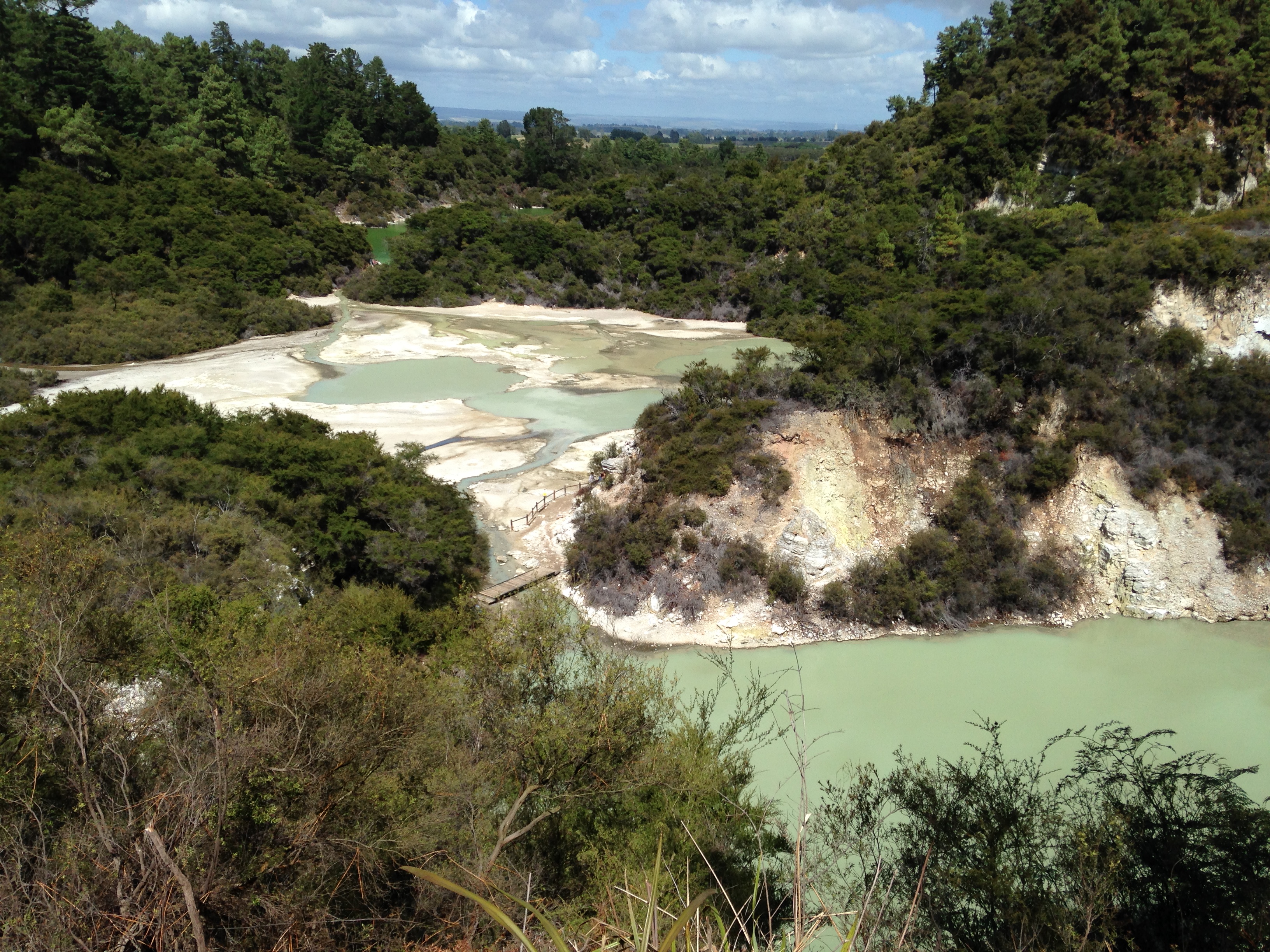
Wai-O-Tapu Thermal Wonderland (1) Wai-O-Tapu Thermal Wonderland (4) Wai-O-Tapu Thermal Wonderland (5)

Wai-O-Tapu

Today we visited the Wai-O-Tapu Thermal Wonderland, yes another tourist trap, but a sight worth spending some time on,  and full of Peter’s favourite photography subjects – weird colours and patterns.

The whole North Island sits atop ongoing tectonic activity and it was so interesting to see the impact of some of that activity on the surface.  The 18 sq km of this Reserve are covered with collapsed craters and boiling pools of mud, some reaching 100 degrees centigrade!  The colours and formations are visually unusual, and there’s a strong smell of sulphur everywhere.  When you see some of the little depressions in the mud where the water/mud mixture is bubbling as hard as a pot of boiling water, you get a pretty good sense of where the concept of a “witch’s cauldron” came from! It is quite unnerving to think of what is happening right under your feet to cause such a thing.

The Drive

In the afternoon we drove right across the island to the Mt Taranaki area, a long drive but with some of the most spectacular scenery I’ve ever “scene.”  I have always thought Hawaii had the most beautiful natural landscapes but I’ve got to say that New Zealand is more stunning.  All the tectonic activity here has left the most interesting variations in the landscape – rounded hillsides as well as very hard-edged dramatic formations a bit like the Napali cliffs in Hawaii, all lushly covered with huge bushy trees and rain forest ferns and rolling on as far as the eye can see. Closer to the road, there are also huge green fields where cows and sheep are grazing as well as a number which are stark and dry.  It is all very reminiscent of the “Lord of the Rings.”

And then we hit the west coast, and suddenly there was an active seascape with lots of cliffs and surfing waves (but no surfers!) on the right, with forested cliffs continuing on the left (dotted with many little newly- shorn sheep!)

Through the whole drive, even along the ocean coastline, we saw only a handful of villages and no people outside of cars at all. It became very clear how low the overall population is outside of one or two urban centres.